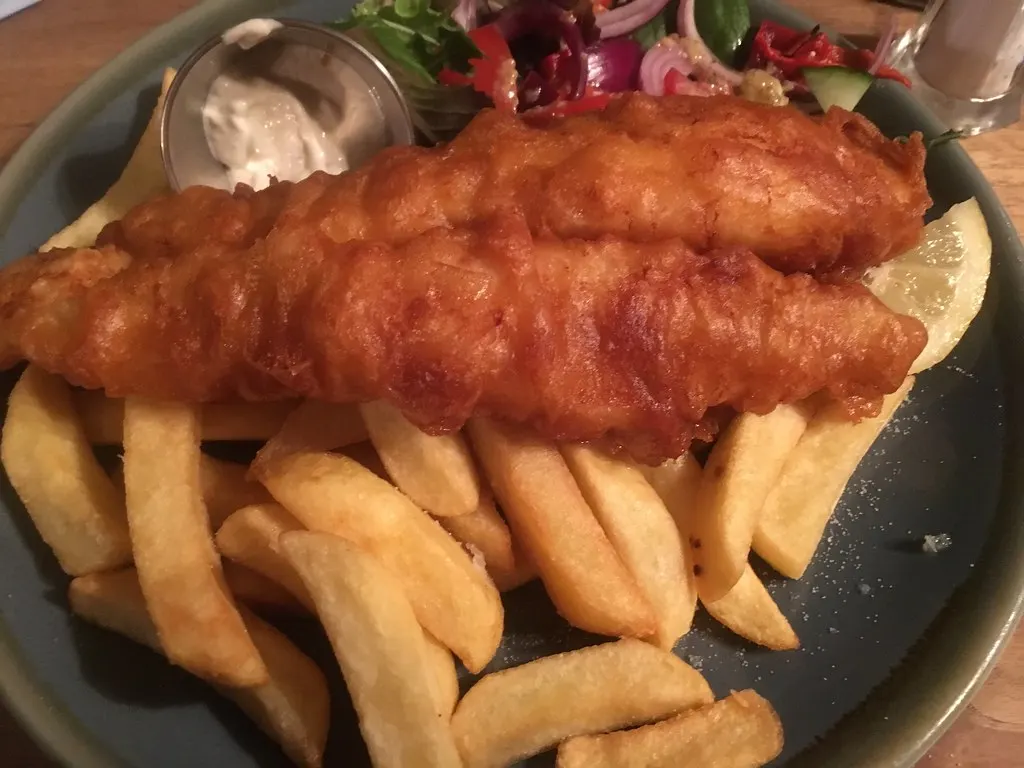
You can smell it from the end of the street, and then the doubt arrives. Is the batter gluten free? Are the chips cooked in the same oil as everything else? For anyone with coeliac disease, fish and chips is the takeaway most likely to go wrong, and the reason is almost always the fryer.
Why the fryer matters more than the batter
Gluten does not cook off. When wheat-battered fish goes into hot oil, particles of batter break away and stay in the oil. Anything fried in that oil afterwards, including plain chips and fish in gluten-free batter, picks them up. A shop can buy the best gluten-free batter mix in the country and still serve food that is not suitable for a coeliac if it goes into shared oil.
What “dedicated fryer” should mean
- A separate fryer, or a separate pan of oil, used only for gluten-free food.
- Oil that has never had wheat batter, breaded scampi, battered sausages or fishcakes in it.
- Its own baskets, scoops and tongs, kept apart from the main range.
- A separate area for battering, with gluten-free flour stored and handled away from wheat flour.
Coeliac Safety Alert
“We change the oil for you” is not the same as a dedicated fryer. Fresh oil in a pan that normally fries wheat batter is better than nothing, but residue stays on the pan, the basket and the range. Ask whether the fryer itself is only ever used for gluten-free food.
Questions to ask at the counter
- Is the gluten-free fish cooked in its own fryer, and is that fryer ever used for anything else?
- Are the chips cooked in that fryer too, or in the main one?
- Do you use separate scoops, baskets and trays for gluten-free orders?
- Which sides contain gluten? Please check the curry sauce, gravy, mushy peas, sausages and fishcakes.
- Is gluten-free available every day, or only on certain nights?
A shop that handles this well will answer quickly and specifically. Hesitation, or “it should be fine”, is your answer too.
Gluten-free nights
Some chippies run a gluten-free night once a week or once a month, starting with clean fryers and fresh oil and frying only gluten-free batter until they close. Done properly, this can work well. Ask whether every fryer is switched over or only one, and whether wheat batter is made or stored nearby during the session.
The extras that catch people out
- Curry sauce and gravy. Many are thickened with wheat flour.
- Sausages, burgers and fishcakes. Rusk and breadcrumbs usually contain wheat.
- Scampi and anything breaded. Assume gluten unless told otherwise.
- Vinegar. Coeliac UK advises that barley malt vinegar is suitable for a gluten-free diet, because the amount of gluten is very low and it is used in small quantities. If you prefer to avoid it, ask what the shop uses.
- Pickled eggs and onions. Usually fine, but tongs are often shared.
Finding a chippy with a dedicated fryer
On Find Gluten Free UK, listings show what each venue says about gluten, and a dedicated fryer is shown as its own badge where the venue says it has one. You can browse gluten-free fish and chip shops or see every venue listed with a dedicated fryer. We are a young directory and most of our listings are in London so far, so if your local is missing, that is why.
A listing describes what a venue has told us or published. It is not a guarantee. Staff, oil and routines change, so ask the questions above every time, even at a shop you know. Our Coeliac Safety Policy explains what each kitchen label means.
Questions and answers
Are chip shop chips gluten free?
Potatoes are gluten free, but most chip shops fry chips in the same oil as wheat-battered fish, which makes them unsuitable for people with coeliac disease. Chips are only suitable if they are cooked in a fryer used solely for gluten-free food.
What is a dedicated fryer?
A dedicated fryer is a fryer used only for gluten-free food, with its own oil, baskets and utensils. Nothing coated in wheat batter or breadcrumbs is ever cooked in it.
Is malt vinegar safe for coeliacs?
Coeliac UK advises that barley malt vinegar is suitable for a gluten-free diet because the gluten level is very low and it is eaten in small amounts. If you would rather avoid it, ask the shop which vinegar it uses.
Know a chippy that gets it right?
Help the next person skip the guesswork. Search for a fish and chip shop with a dedicated fryer, or add the one you trust.
Comments
One response to “Coeliac Fish and Chips UK: The Dedicated Fryer Guide”
[…] coeliac fish and chips guide explains the questions to ask any chip […]